In commercial and industrial environments, cleaning is not only about appearance—it directly impacts safety, compliance, customer perception, and operational efficiency. Facility managers often face a common challenge: maintaining high cleaning standards while controlling manpower, time, and cost. A structured productivity approach can significantly improve results without increasing workload.
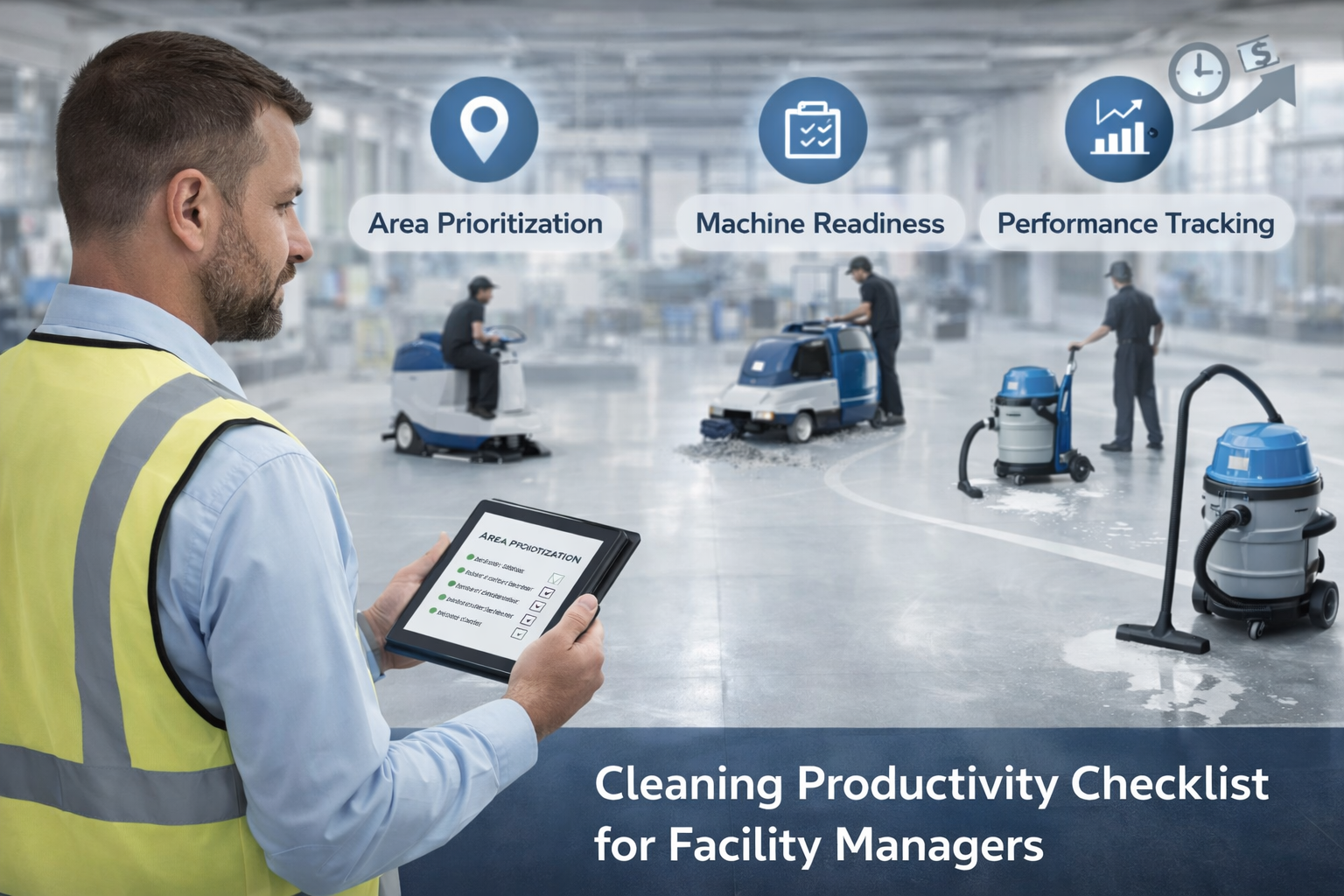
Start with area prioritization. Not every zone needs the same cleaning frequency. High-traffic areas such as entrances, corridors, loading bays, and washrooms require daily or multiple-cycle cleaning. Low-traffic areas can be maintained on scheduled rotations. Creating a zone-based cleaning plan helps allocate resources efficiently and prevents over-cleaning or missed areas.
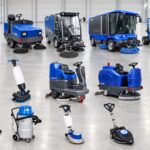
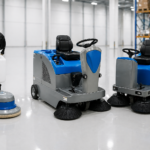
Next, focus on the right machine for the job. Manual cleaning can be time-consuming and inconsistent in large spaces. Walk-behind scrubbers are best for medium areas and narrow aisles, while ride-on scrubbers reduce cleaning time drastically in warehouses, malls, and industrial floors. Sweepers should be used in dusty environments to prevent debris accumulation. Industrial wet and dry vacuums are essential for quick spill recovery and heavy-duty cleanup. Using correct equipment reduces labor hours and increases daily cleaning coverage.
A major productivity improvement comes from standardized operator routines. Train operators to follow a consistent sequence: dry debris removal first, then scrubbing, and finally detailed edge cleaning if required. This avoids rework and ensures floors stay cleaner for longer. Machine readiness also matters—operators should follow a checklist before every shift, including water level, squeegee condition, brush inspection, and battery or power checks.
Downtime is one of the biggest hidden costs. To reduce interruptions, implement planned cleaning schedules during low-traffic hours and avoid peak operational times. This increases efficiency and improves safety. For larger sites, assigning machines by zone prevents delays and ensures continuous workflow.
Another overlooked factor is trackable cleaning performance. Measure productivity with simple KPIs: area cleaned per hour, labor hours saved, frequency compliance, and downtime incidents. Even basic monitoring helps improve accountability and planning decisions.
For facility managers in the UAE, renting professional cleaning equipment is a practical way to scale cleaning capacity without large capital expenditure. Rental programs allow businesses to increase machine availability during peak periods, projects, audits, or seasonal cleaning needs—while maintaining predictable operating costs.
With a productivity-first approach, cleaning becomes more controlled, measurable, and efficient—supporting better facility performance and stronger business continuity.